How false ceiling design changes depending on room size, and where lighting should actually go.
Small rooms need restraint, not more layers
In smaller rooms, a single-level false ceiling with a simple cove light around the perimeter usually works better than a multi-tier design, which can make the room feel lower and more closed in.
Larger rooms can support layered designs
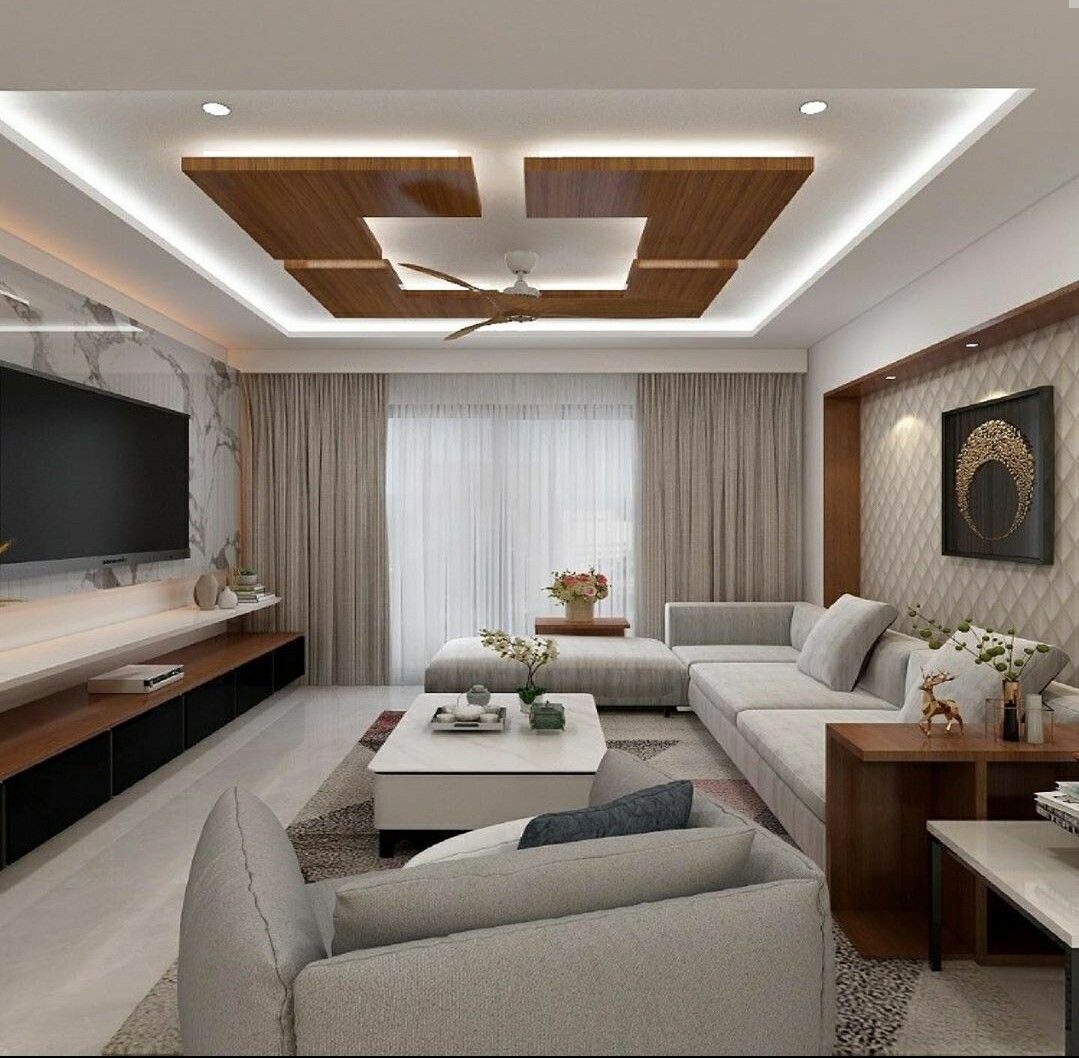
Living rooms and larger bedrooms have enough vertical and floor space to support multi-level ceiling designs with mixed lighting — cove lighting at the edges, spotlights over specific areas, and a pendant or panel light as a centrepiece.
Lighting layout should follow furniture, not the ceiling shape
A common mistake is designing the ceiling shape first and placing lights symmetrically, without accounting for where the bed, sofa, or dining table will actually sit. Lighting placement should be planned against the furniture layout, not just the ceiling geometry.
Material choice affects long-term maintenance
Gypsum board gives a smoother, more refined finish but is more sensitive to moisture; PVC is more moisture-resistant and easier to maintain, which matters most in kitchens and bathrooms.